A Day at the Largs Viking Festival 2025
A visit to the Largs Viking Festival on the Ayrshire coast of Scotland: the encampment, a coin-striking demonstration, and an evening battle reenactment, seen through a growing interest in digital humanities.
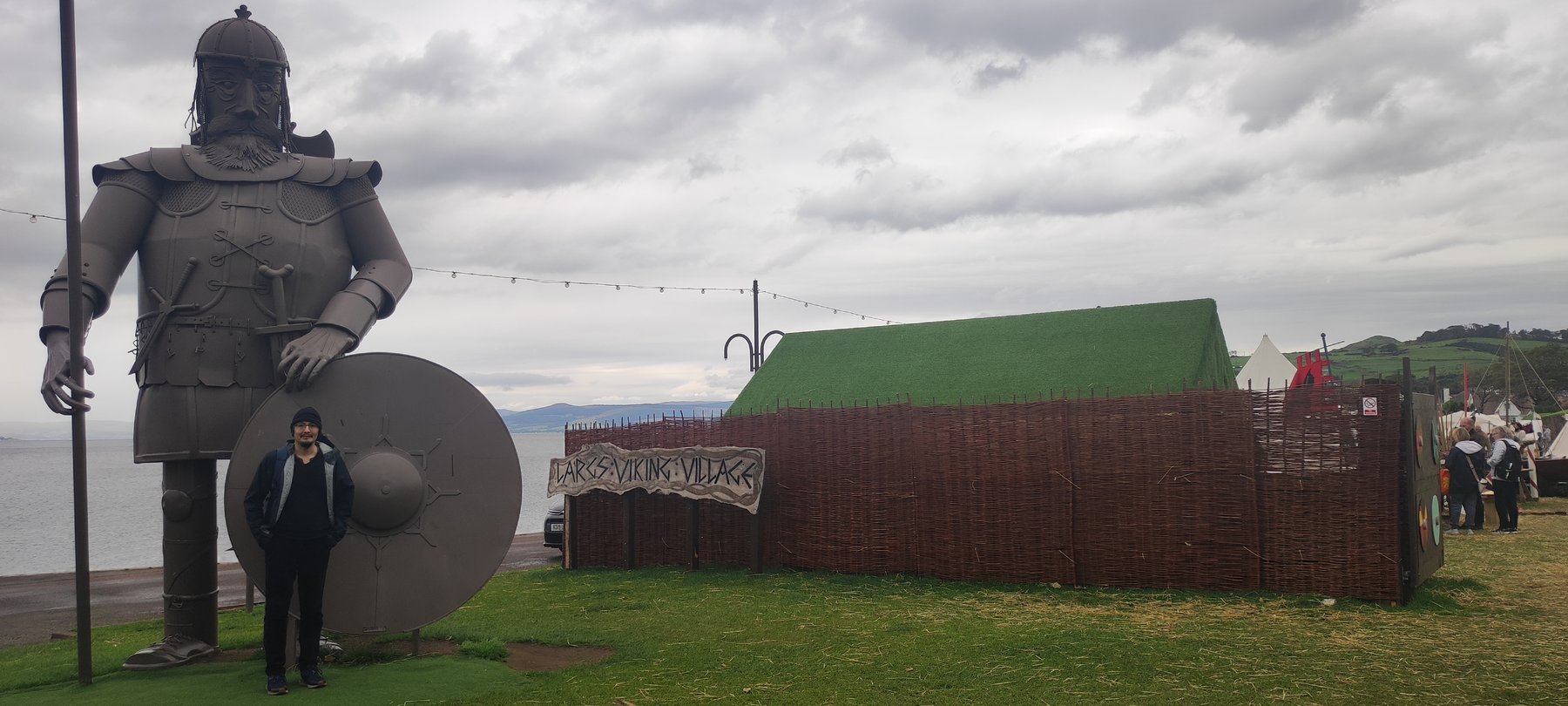
Standing next to the giant Viking statue at the Largs Viking Village, overlooking the Firth of Clyde.
Alongside optimization research, I’ve been spending more time on digital humanities: how computational tools, and AI in particular, can help preserve, analyse, and bring history, archaeology, and material culture to a wider audience. This note is part of that. Less a research write-up, more a record of a place where that interest showed up in person.
The Largs Viking Festival ran from 30 August to 7 September 2025 on the Ayrshire coast of Scotland, and I visited on the closing weekend, catching the Festival of Fire (battle reenactment, torchlight procession, and the ceremonial burning of the Viking longboat at Barrfields Stadium) on the Saturday evening, and the encampment and market on the Sunday. The festival commemorates the Battle of Largs (1263), when Norse and Scottish forces clashed near the town, and it’s held every year along the Esplanade, right on the Firth of Clyde. I’ve always found the Viking Age genuinely interesting, not just the raiding and longships that dominate the popular image, but the trade networks, the craftsmanship, and how much of it is reconstructed today from archaeology rather than assumption. A weekend built entirely around that history was hard to pass up.
The encampment
For the weekend, the seafront turns into a reconstructed Viking village: wattle fencing, canvas tents, a market row, and, right at the entrance, a genuinely enormous Viking statue keeping watch over the water (the photo above is from right outside it).
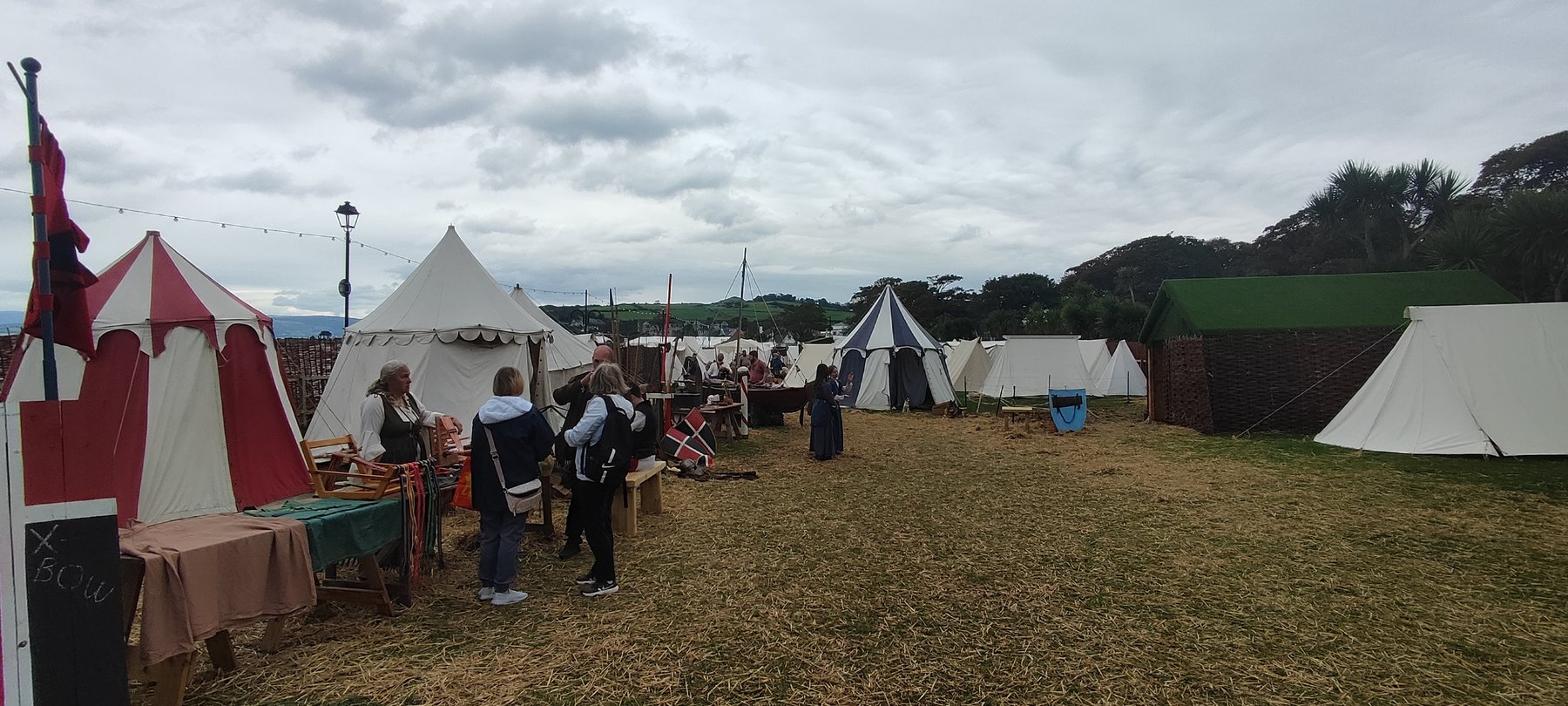
Walking through it feels less like a stage set and more like a working camp: stalls selling handmade goods, a small boat pulled up on the grass, and reenactors going about demonstrations rather than posing for photos.
Coin striking, up close
The most interesting stop for me was a coin-striking demonstration, and I didn’t just watch this one. The coin-masters had a die and hammer set up on a section of tree trunk, striking blank silver discs one at a time the same way Viking-age moneyers would have, and they let visitors have a go themselves.
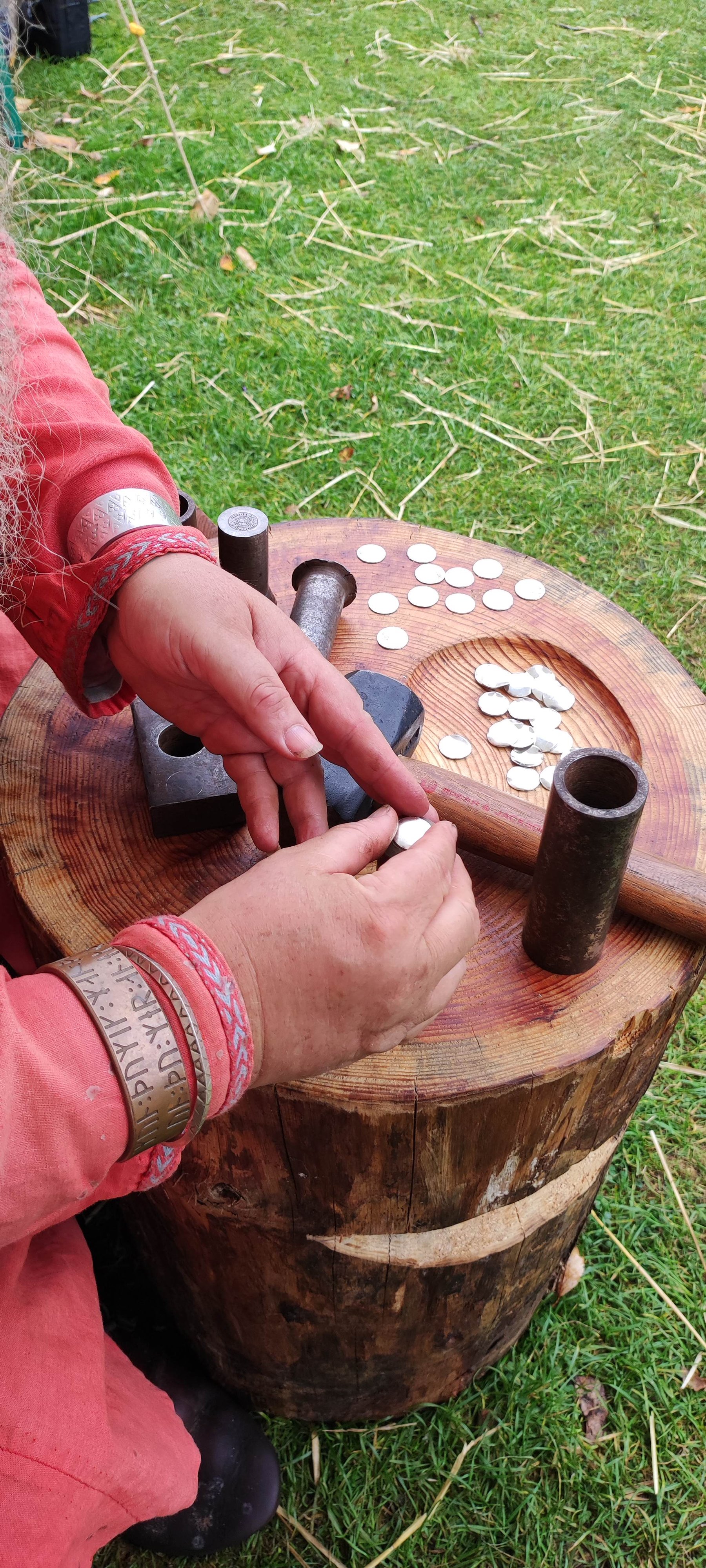
So I struck one myself.
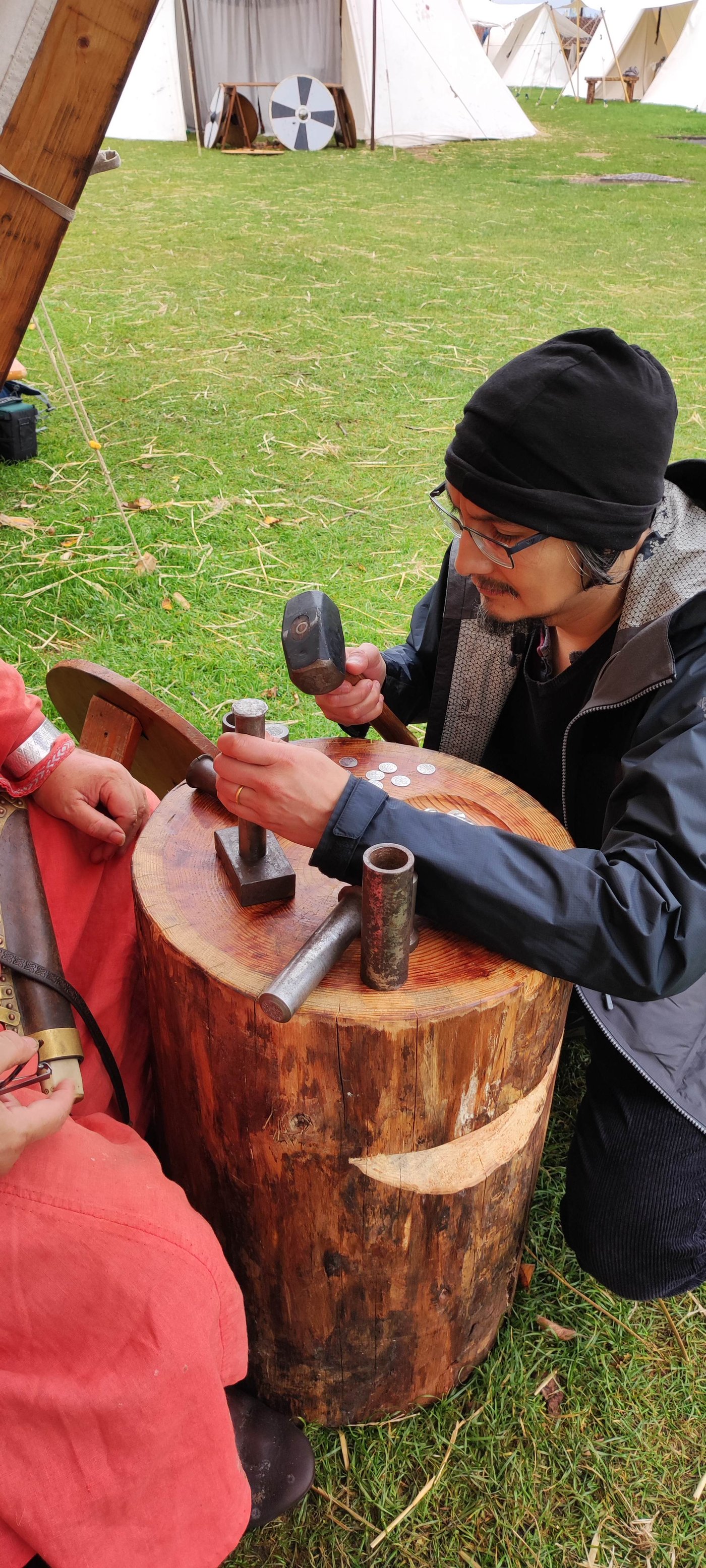
It’s a slower, more deliberate process than I expected. Each strike has to land square or the design comes out lopsided. A good reminder of how much of the Norse economy ran on exactly this kind of hand-struck silver.
Arms, armour, and fur
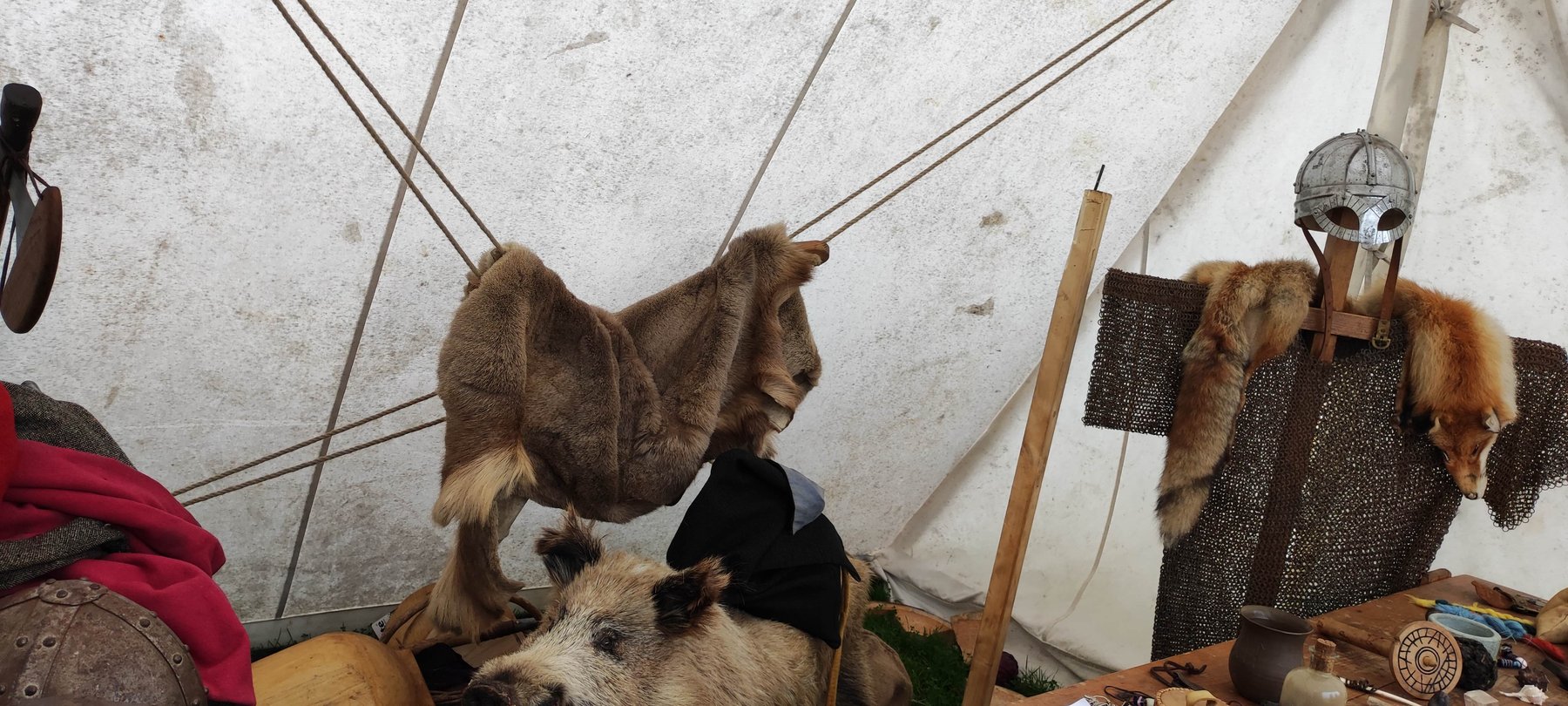
Inside one of the tents: a spectacled helmet, a mail shirt, furs, and a boar hide. The kind of material culture that’s easy to read about but much more effective to see at actual scale, texture included.
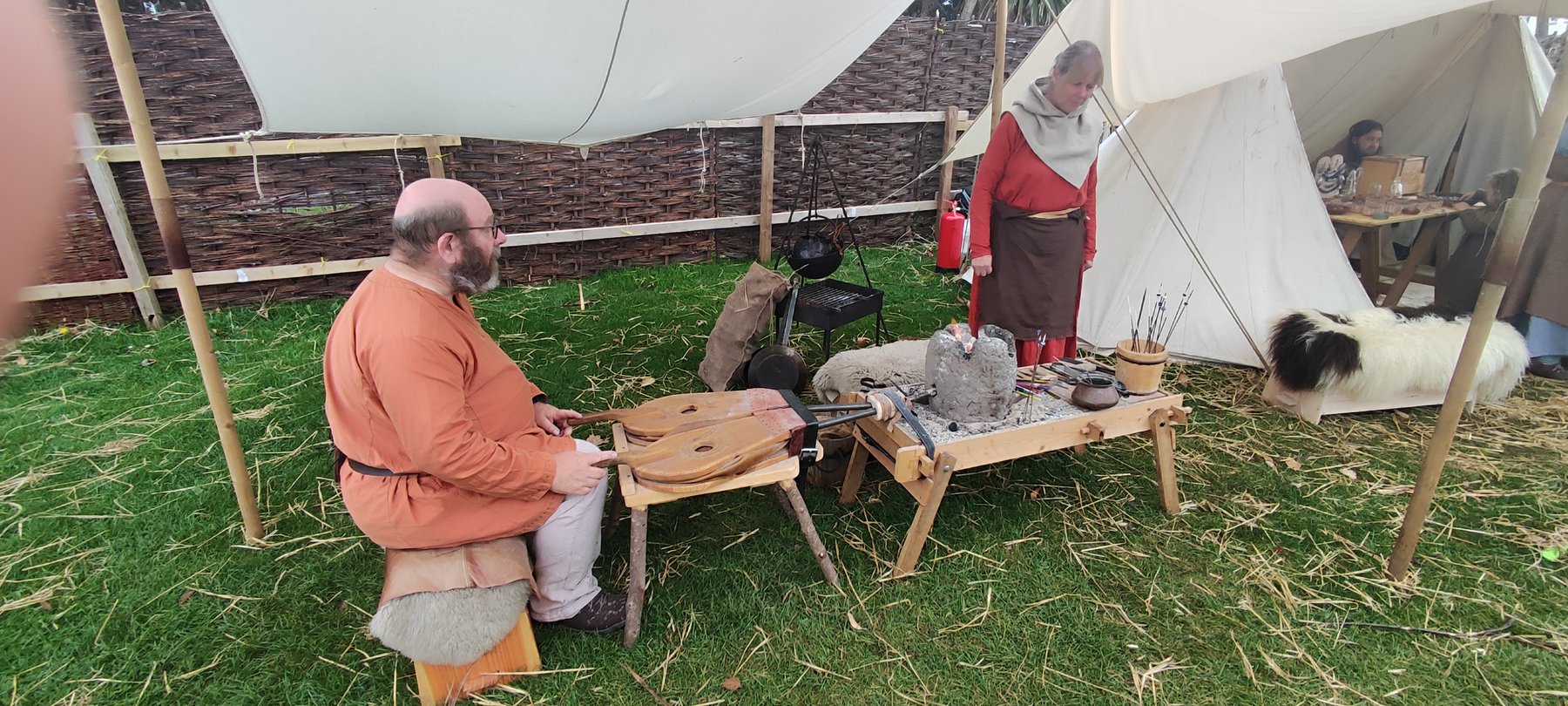
Nearby, a blacksmith was working a small portable forge (bellows, anvil stone, and a sheepskin to sit on), turning out ironwork the same way it would have been done a thousand years ago, just a few feet from the modern town behind it.
Forged points
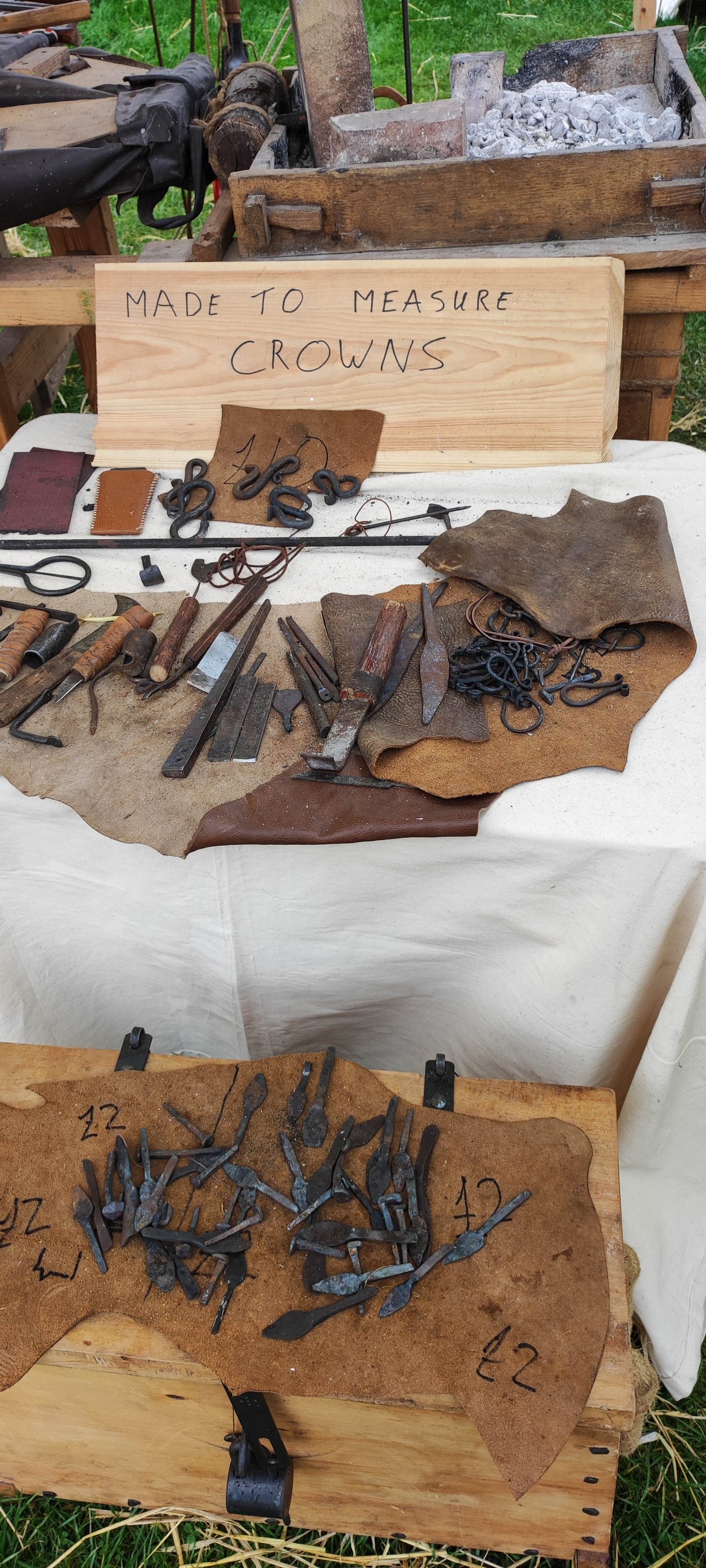
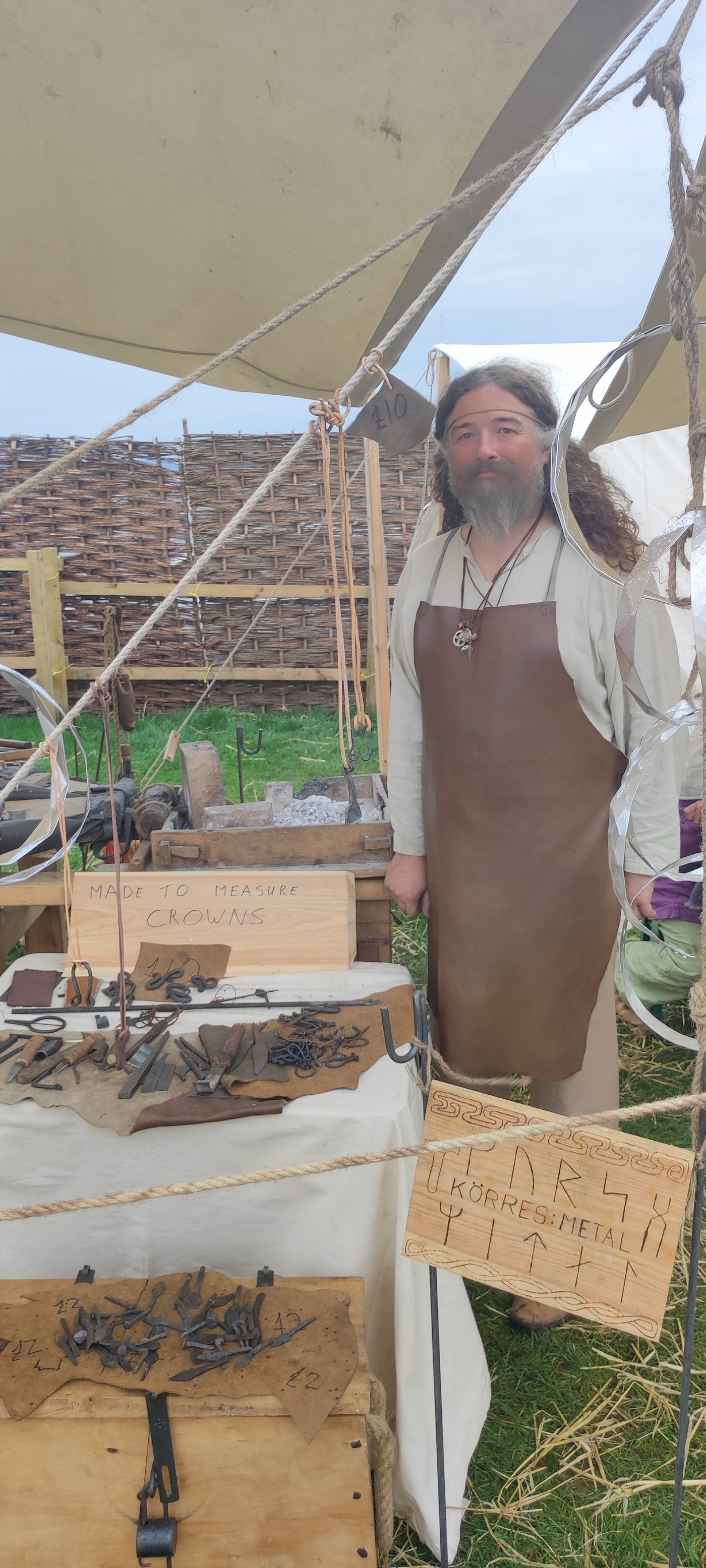
One of the stalls, Körres Metal, had tables covered in hand-forged points and tools, everything from small blades to arrowheads, each piece a little different from the next since they’re hammered out one at a time rather than cast from a mould.
I ended up buying a few forged points from the smith himself.
The battle at dusk
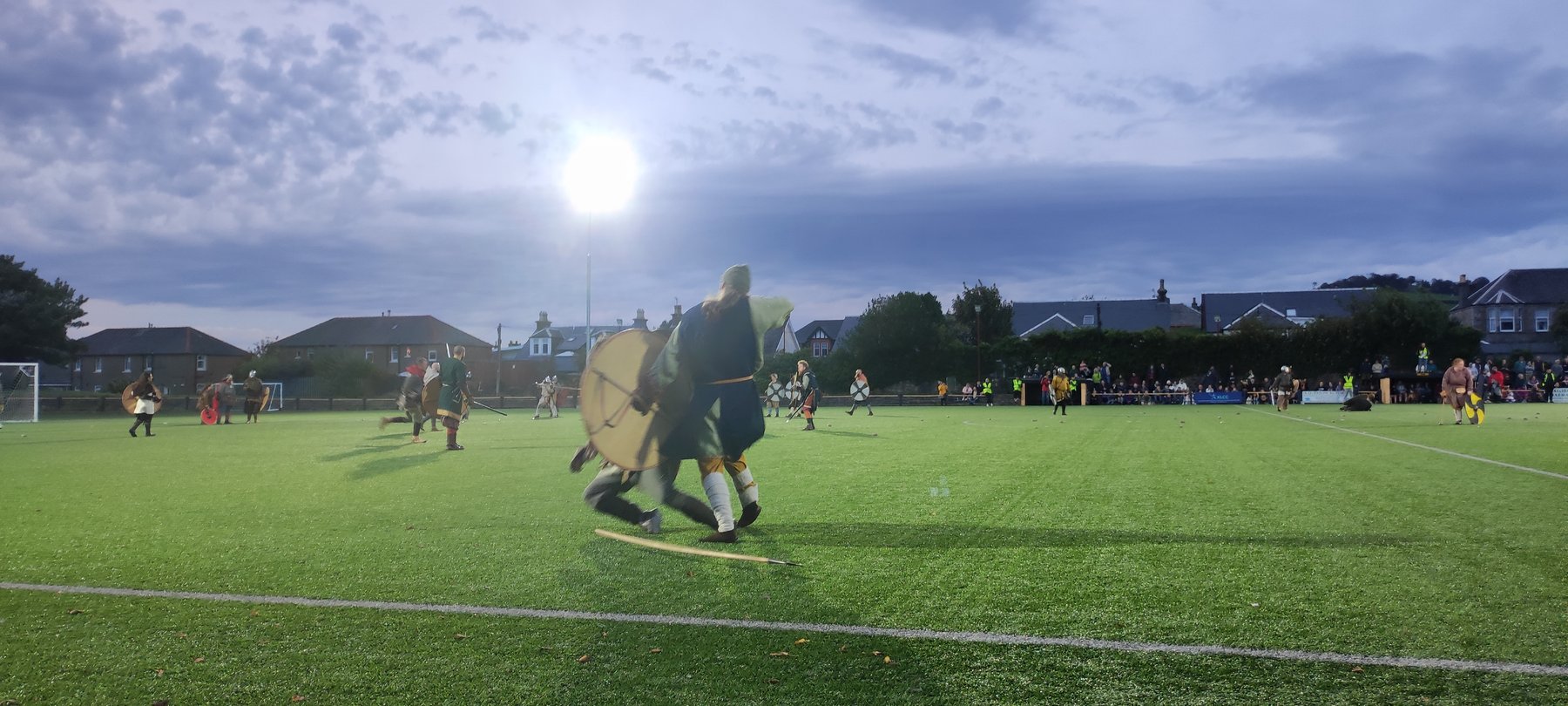
The festival closes each evening with a battle reenactment on the floodlit pitch: shield walls, spears, and a lot more choreography and control than the chaos of the photo below suggests.
It’s the same instinct that draws me to digital humanities work. History and material culture are usually easiest to actually understand in person, close to the objects and the process, not just in a paper.
References
- Largs Viking Festival — official site
- Largs Viking Festival — official Facebook page
- Save the Date: The Largs Viking Festival is back from August 30th to 7th September 2025 — Largs Viking Festival, Facebook
- Largs Viking Festival ready for 45th spectacular for 2025 — Ayrshire Today